Baqué Molinie
Haute Couture houses call upon this emboirdery team for their finest work; Pharrell Williams has also commissioned bespoke pieces. Their elaborate, expertly embroidered creations are a genuine artistic medium for them. I specifically talked with them about their series of bejeweled objects, each inspired the history of the champagne brand, Moët & Chandon. Photographs by Jeff Burton.
BEJEWELED ICONS OF MOËT
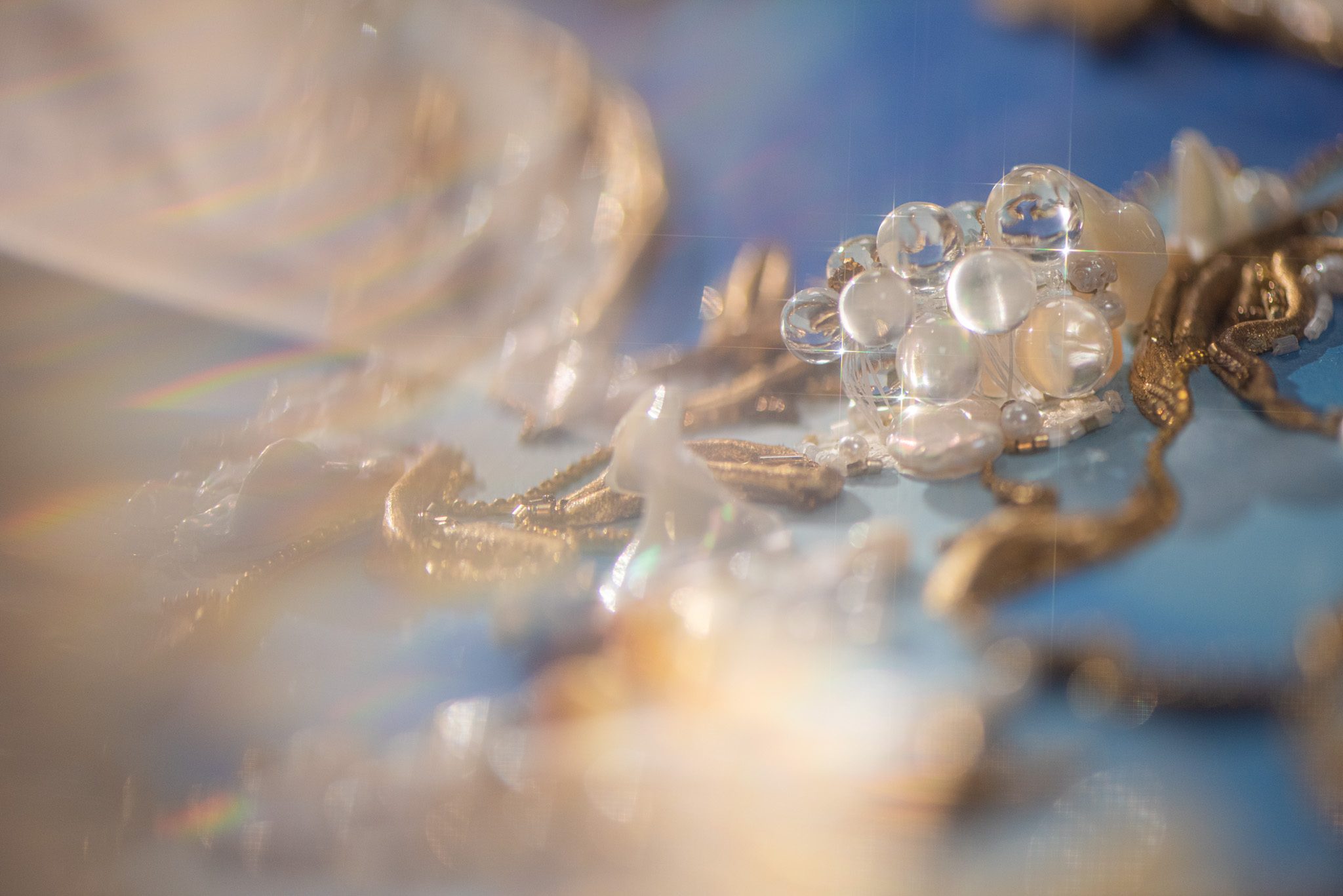
In 2024, they tested being embroiderers as well as creators with a series of bejeweled objects for Moët & Chandon, crafting with full freedom figurative symbols representing key relationships, experiences, or accomplishments across the brand’s over 280 years of history. Jean-Rémy Moët, grandson of founder Claude Moët, was close friends with Napoleon I, for example. The brand goes back.
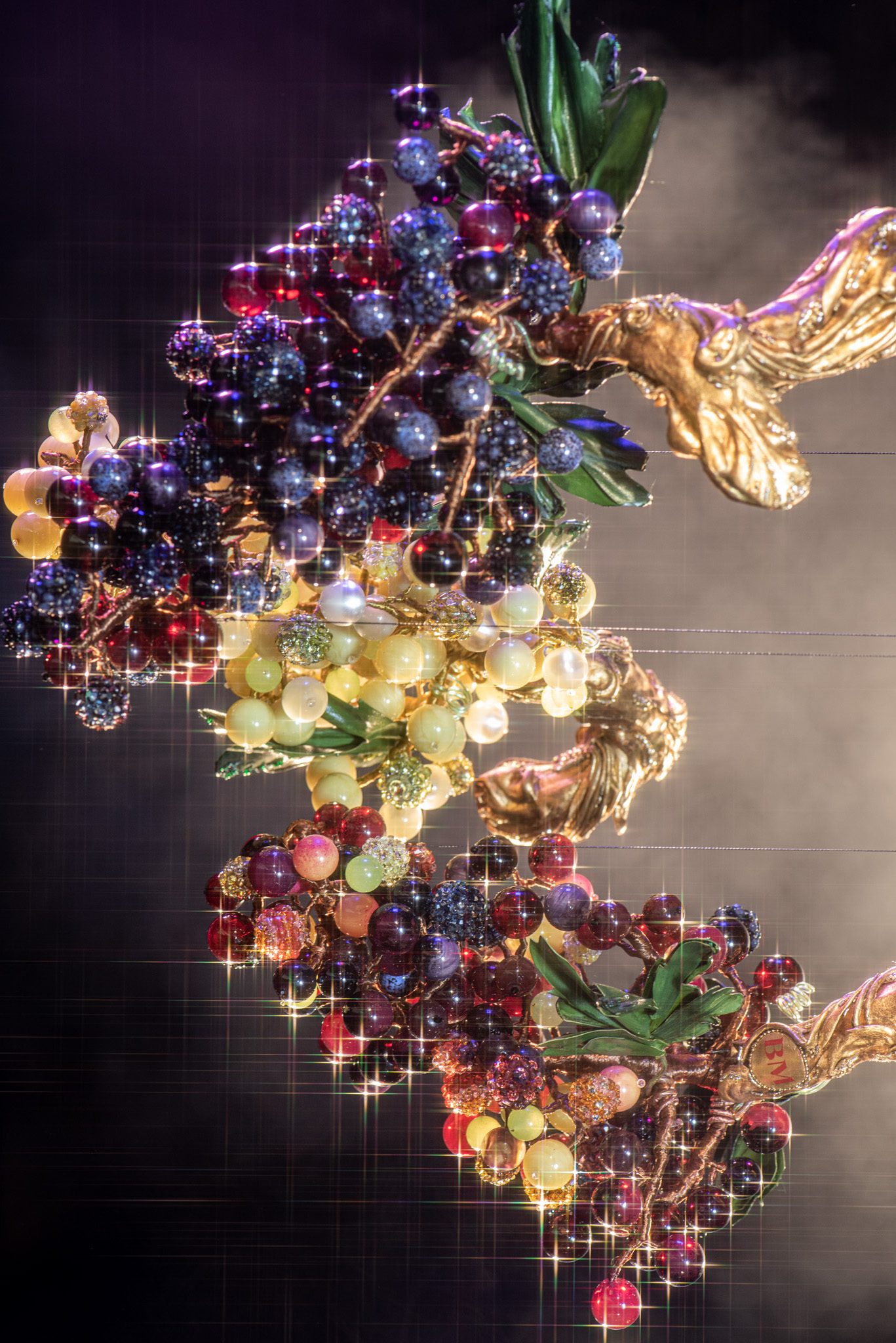
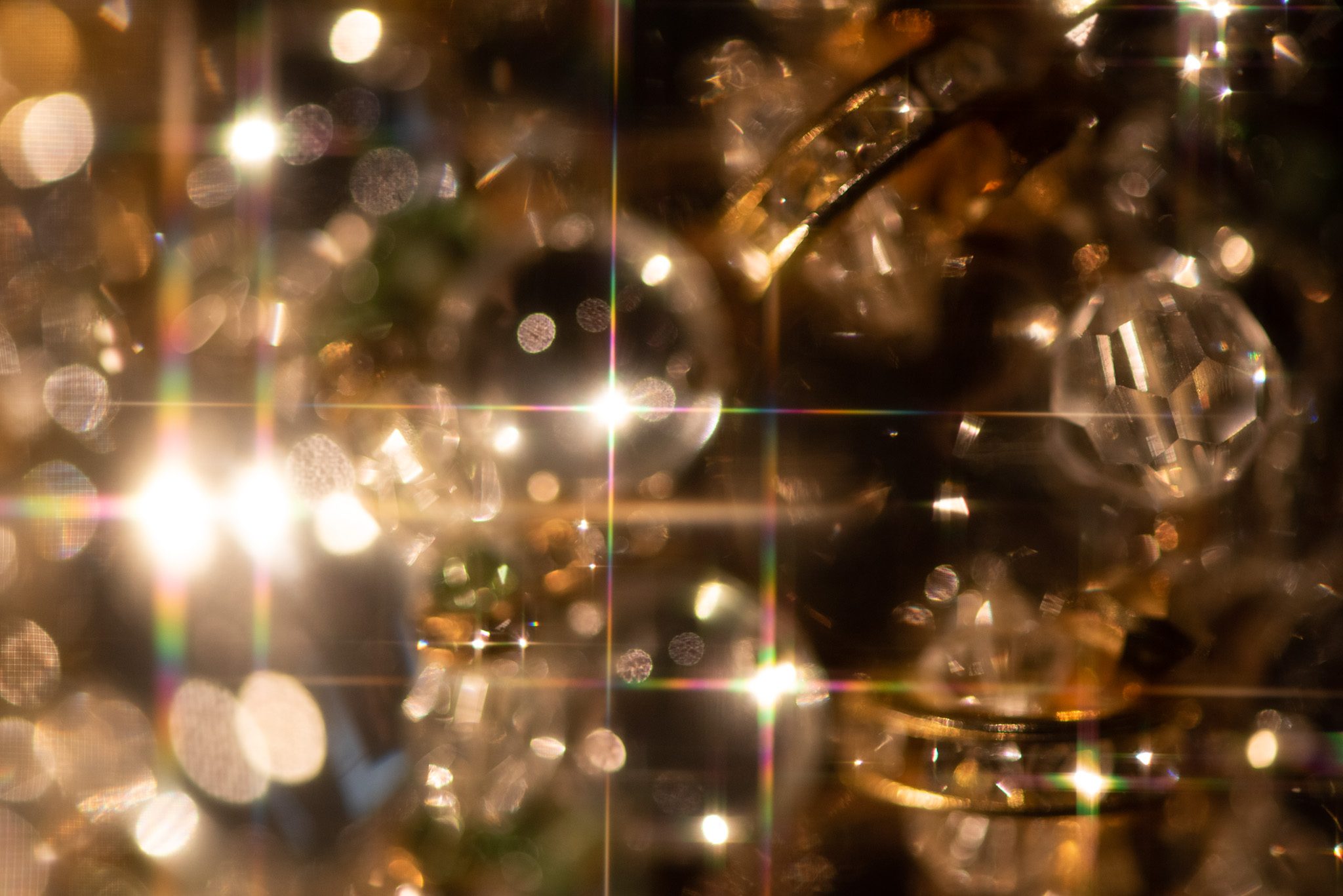
A triptych of grape bunches—representing Chardonnay, Pinot Noir, and Pinot Meunier—are made like jewels, a gilt horse head recalls racing wins, or even the torch of the Statue of Liberty evokes Moët’s presence in America since 1792; each of the eleven objects in the exhibition speaks of eras, stories, and otherworldly sparkle. Champagne gets even closer to jewelry with the light effect glamour lent by L.A.-based fashion and fine arts photographer Jeff Burton, known for his eye for intimate detail. Early in his career he worked as a still photographer on film sets in the porn industry; when bored during down times, he began capturing the off-takes, the details that speak.
Atelier Baqué Molinié opened a temporary, specially dedicated studio for the creations, working over six months on their painstaking revisions. Crystal beads, gold leaf, molded leather, pearls—a sense of opulence and meaning, everywhere.
From May 18th, 2024
20 avenue de Champagne, 51200 Epernay, France
What is the hardest element to master in embroidery work of this finery?
VM: It’s always the dimension of time. Time is a given, we must always be apprehensive of it. And it is the most difficult aspect because we must meet the deadline but also have a degree of perfectionism and always continue to do better and that is something which never actually stops. Embroidery is a technique that is so multiple, there are so many materials and options, everything is infinite when we are in it; it can even make you dizzy.
What have you learned and would like to transmit in embroidery?
LB: There is a creative process that I learned at school which has followed me since and I always put into practice, and try to transmit. We must always push, combine, decline, always go a little further. It is this dimension of spending time to break things down, and to have the possibility to make mistakes, because in making mistakes we find solutions. And, to always create a universe in our head to associate inspirational images with techniques which allow us to avoid remaining too literary.
VM: For me, it is the relationship that embroidery can have with the sacred. There is always a connection, a fascination around the sacred for what it represents. It’s this sacred side that I find interesting to maintain with embroidery. Even the workshop space is a space that must be timeless. There is this magical side where the technique must be transmitted through gesture and through practice.
If there is one piece in the exhibition you’d love to keep, which would it be?
LB: “The three grape clusters—we designed them like jewels. It was interesting from a technical point of view and from a sourcing point of view. We used old glass beads, vintage ones, which we associated with grapes created with full nuances of color, in a play of matte and gloss to bring contrast and depth. And, also, for what it represents in the story that we wanted to tell. It’s the start of everything, a beautiful tribute to what champagne is. It’s this connection to nature and the earth that makes it a primordial object in this collection. These three grape varieties, this alchemy, this magic like a recipe specific to this territory which allows the creation of such a rare nectar.